

Doona Stroller Instructions: A Comprehensive Guide
Welcome to the ultimate resource for your Doona! This guide provides detailed instructions, covering everything from initial setup to troubleshooting, ensuring a safe and convenient experience.
Understanding Your Doona: Key Components
Let’s familiarize ourselves with your Doona’s essential parts. The Doona Base is the foundation, securely attaching to your vehicle. The Doona Car Seat, integrated with the stroller functionality, provides a safe and comfortable ride for your little one. A crucial element is the Rotating Handle, allowing for effortless maneuvering and transitions.
Observe the Rear-Wheel Brakes, vital for stability when stationary. The Harness System, designed for optimal safety, secures your baby during both car journeys and strolls. Pay attention to the Stroller Mode Engagement Button, which initiates the stroller transformation. The Frame, constructed for durability, supports the entire system.
Furthermore, the Fabric Parts, including the seat pad and canopy, offer comfort and protection. Understanding these components – the base, car seat, handle, brakes, harness, and frame – is the first step towards mastering your Doona. These features combine to create a seamless transition between car seat and stroller, offering unparalleled convenience for parents on the go.
Unboxing and Initial Setup

Carefully unpack your Doona, ensuring all components are present: the Doona car seat/stroller, the base, and any included accessories. Inspect for any shipping damage before proceeding. Begin by attaching the Doona Base to the vehicle – refer to the dedicated section for detailed instructions. This initial connection is crucial for safe operation.
Next, familiarize yourself with the Stroller Mode Engagement Button and the Rotating Handle. Practice engaging and disengaging stroller mode to understand the mechanism. Ensure the Rear-Wheel Brakes are functioning correctly before use. A quick check of the Harness System will confirm its proper operation.
Download the Doona App for additional resources and support. Before your first ride, review the user manual thoroughly. Proper initial setup is paramount for maximizing the Doona’s safety and convenience features. Remember to keep the user manual accessible for future reference and potential troubleshooting.
Attaching the Doona Base to the Car
Securely installing the Doona Base is vital for your baby’s safety. Begin by locating a suitable seating position in your vehicle with a standard seatbelt system. Ensure the seatbelt has a three-point locking latch. Position the Doona Base on the car seat, aligning it correctly.
Thread the vehicle’s seatbelt through the designated belt path on the base, following the diagram in the user manual. Firmly tighten the seatbelt, ensuring the base is locked into position and doesn’t move more than one inch side-to-side or front-to-back. Utilize the Recline Indicator to confirm the correct angle for infant safety.
Double-check all connections and the tightness of the seatbelt. A properly installed base is essential for the Doona’s car seat functionality. Refer to your vehicle’s owner’s manual for specific instructions regarding car seat installation. Always prioritize a secure and stable base before placing the Doona car seat onto it.
Installing the Doona Car Seat onto the Base
Connecting the Doona car seat to its base is a straightforward process, ensuring a secure ride. Align the Doona car seat with the base, carefully lowering it until you hear a distinct ‘click’. This confirms the car seat has properly locked into the base.
Verify the connection by firmly pulling upwards on the car seat – it should not detach from the base. A green indicator light on the base will illuminate, providing visual confirmation of a secure attachment. If the light doesn’t appear, re-align and re-attach the car seat.
Before each journey, always double-check the connection. The Doona’s secure locking mechanism is crucial for safety. Refer to the user manual for detailed diagrams and troubleshooting tips. A properly installed car seat, combined with a securely attached base, provides optimal protection for your little one during travel.
Safety First: Harnessing Your Baby
Properly securing your baby within the Doona is paramount for their safety. Begin by ensuring the harness straps are free from twists. Gently place your baby into the car seat/stroller, and position the harness straps over their shoulders.
Fasten the crotch buckle, ensuring it clicks securely into place. Then, pull the shoulder straps to tighten the harness. The straps should be snug, but not overly tight – you should be able to fit one finger comfortably between the strap and your baby’s collarbone.
Always check that the harness is correctly adjusted before each journey. A secure harness prevents your baby from sliding or being ejected in the event of a sudden stop or collision. Never add padding or aftermarket products to the harness, as these can compromise its effectiveness. Refer to the Doona manual for detailed illustrations and guidance on achieving a safe and comfortable fit.
Adjusting the Harness for Optimal Fit
Achieving a perfect harness fit is crucial as your baby grows. The Doona features adjustable shoulder straps and a crotch buckle to accommodate different sizes. To adjust the shoulder straps, locate the height adjustment slots behind the baby’s shoulders.
Loosen the straps by pressing the red release button and repositioning them to the appropriate slot. Ensure both sides are at the same height. Next, fine-tune the tightness by pulling on the shoulder strap adjusters located near the baby’s hips.
Regularly check the fit – ideally before each use. A properly adjusted harness will keep your baby secure without restricting their movement. Remember the “one-finger rule”: you should be able to slide one finger between the strap and your baby’s collarbone. Incorrectly adjusted harnesses can compromise safety, so prioritize a snug, yet comfortable, fit. Consult the Doona user manual for visual aids and specific instructions.
Transitioning from Car Seat to Stroller Mode
The Doona’s seamless transition from car seat to stroller is a key feature. Begin by ensuring the car seat is fully locked into the base and detached from the vehicle. Locate the release buttons on either side of the car seat handle – these unlock the stroller mechanism.
Press both buttons simultaneously and gently pull the handle forward. You’ll hear a click as the stroller frame unfolds. Confirm the frame is fully extended and locked into place before placing your weight on the handle. The wheels will automatically drop down, ready for strolling.
Always double-check that all locking mechanisms are engaged before use. A visual inspection confirms a secure transition. This innovative design allows for effortless movement from car to sidewalk, providing unparalleled convenience for parents on the go. Refer to the Doona manual for detailed diagrams illustrating this process.
Engaging and Disengaging Stroller Mode
To engage stroller mode, after unfolding the frame (as detailed previously), listen for a distinct click indicating secure locking. Visually inspect the frame – all components should be firmly connected, and the wheels should rotate freely. A slight wobble suggests incomplete engagement; re-check the locking mechanisms.

Disengaging stroller mode to return to car seat configuration requires locating the same release buttons on the handle. Pressing these simultaneously allows you to fold the stroller frame back towards the car seat. Ensure no obstructions hinder the folding process.
Once folded, the Doona returns to its compact car seat form. Confirm the frame is securely latched in this position before attempting to install it back into your vehicle. Regular practice will make this transition second nature. Always prioritize safety by verifying complete engagement or disengagement before each use, referencing the user manual for detailed illustrations.
Using the Rotating Handle
The Doona’s rotating handle is a key feature for maneuverability and parental comfort. To adjust the handle, locate the release button – typically situated near the grip. Press and hold this button while simultaneously rotating the handle to your desired position. You’ll feel distinct clicks as it locks into different angles.
The handle offers multiple positions, allowing you to adapt to various pushing preferences and terrains. A higher position is ideal for taller parents or uneven surfaces, while a lower position provides greater control. Ensure the handle is securely locked before applying pressure or navigating inclines.
For storage or transport, the handle can rotate forward, minimizing the stroller’s profile. Always double-check the locking mechanism after each adjustment. Familiarize yourself with the handle’s range of motion and locking points for a smooth and safe experience. Refer to the user manual for visual guidance on handle operation.
Adjusting the Handle Height
Optimizing comfort is crucial, and the Doona stroller allows for personalized handle height adjustments. Locate the telescopic handle adjustment levers, usually positioned on the handle’s upright sections. These levers often feature a push-button release mechanism.
To extend the handle, simultaneously press both release levers and gently pull the handle upwards to your preferred height. The Doona offers several height settings to accommodate parents of varying statures. Once you’ve reached the desired height, release the levers; they will click into place, securing the handle.
To retract the handle, repeat the process – press both levers and push the handle downwards. Ensure both sides are adjusted to the same height for balanced steering and control. Regularly check the levers to confirm they are functioning correctly and securely locking the handle in position. A properly adjusted handle enhances pushing comfort and reduces strain.
Braking System: Operation and Maintenance
The Doona stroller features rear-wheel brakes designed for secure stopping power on various surfaces. To engage the brake, locate the brake pedal – typically positioned near the rear wheels. Press down firmly on the pedal until you hear a distinct click, indicating the brake is activated. Always test the brake’s effectiveness before each use, especially on inclines.
To disengage the brake, lift the brake pedal upwards. Ensure the brake is fully released before attempting to maneuver the stroller. Regularly inspect the brake cable and mechanism for any signs of wear or damage. Keep the rear wheels free from debris, as this can affect braking performance.
For maintenance, periodically clean the brake area with a damp cloth to remove dirt and grime. Avoid using lubricants, as they can attract dust and compromise braking efficiency. If you notice any issues with the brake’s functionality, contact SimpleParenting customer support for assistance.
Folding the Doona Stroller
Folding the Doona is a straightforward process designed for quick and compact storage. First, ensure the stroller is in stroller mode and the handle is in the upright position. Locate the folding mechanism – typically a button or lever near the handle. Press or activate this mechanism to initiate the folding sequence.
As you activate the folding mechanism, gently guide the stroller inwards, allowing it to collapse into its folded configuration. The Doona is designed to fold relatively automatically, but a little assistance may be needed initially. Once folded, secure the stroller with the integrated safety latch or strap to prevent accidental unfolding during transport or storage.
Always ensure the stroller is fully locked in the folded position before lifting or carrying it. The folded Doona is designed to be compact enough for convenient storage in car trunks or other limited spaces. Practice the folding process a few times to become familiar with the steps.
Unfolding the Doona Stroller
Unfolding the Doona is just as simple as folding it, allowing for a swift transition from storage to use. Begin by releasing the safety latch or strap that secures the stroller in its folded position. Locate the unfolding mechanism – usually a button or lever opposite the folding mechanism.
Press or activate the unfolding mechanism and simultaneously guide the stroller outwards. The Doona will automatically begin to unfold, revealing the stroller frame and wheels. Ensure there is sufficient clear space around the stroller during unfolding to prevent any obstructions.
Once fully unfolded, listen for a click or feel for a secure locking sensation, confirming that the stroller is properly locked into its upright position. Before placing your child in the stroller, double-check that all components are securely fastened and that the wheels are functioning correctly. A quick visual inspection ensures a safe and stable ride.
Checking Wheel Functionality
Regularly inspecting the Doona’s wheels is crucial for ensuring smooth maneuverability and your child’s safety. Begin by visually examining each wheel for any signs of damage, such as cracks, wear, or loose parts. Pay close attention to the tire treads, looking for uneven wear patterns that might indicate alignment issues.
Next, manually test the rotation of each wheel. They should spin freely and without any noticeable resistance or grinding sounds. If a wheel feels stiff or doesn’t rotate smoothly, investigate further to identify the cause – it could be debris or a mechanical issue.

Engage and disengage the brakes several times to confirm they are functioning correctly. The brakes should hold the stroller securely in place on a slight incline. If the brakes are loose or ineffective, consult the braking system section for adjustment instructions or contact customer support. Consistent wheel checks contribute to a secure and enjoyable strolling experience.
Cleaning and Maintenance of the Fabric Parts
Maintaining the fabric components of your Doona is essential for hygiene and longevity. Regularly vacuum the seat pad, canopy, and harness straps to remove loose dirt and debris. For more thorough cleaning, most fabric parts are removable and machine washable – always check the care label first!
When machine washing, use a mild detergent and a gentle cycle with cold water. Avoid bleach or harsh chemicals, as these can damage the fabric. Allow the fabric parts to air dry completely before reattaching them to the stroller. Direct sunlight can cause fading, so drying in a shaded area is recommended.
For spot cleaning, use a damp cloth and mild soap to gently wipe away stains. Avoid excessive water, which could soak into the padding. Regularly inspect the harness straps for wear and tear, and replace them if necessary. Proper fabric care ensures a comfortable and safe environment for your little one.
Cleaning and Maintenance of the Frame
Preserving the integrity of your Doona’s frame is crucial for its smooth operation and durability. Regularly wipe down the frame with a damp cloth to remove dust, dirt, and grime. For stubborn marks, a mild soap solution can be used, but ensure it’s thoroughly wiped away afterwards.
Avoid using abrasive cleaners or solvents, as these can damage the finish and potentially compromise the frame’s structural integrity. Pay particular attention to the rotating mechanisms and folding joints, ensuring they are free from debris. Lubricate these areas periodically with a silicone-based lubricant to maintain smooth movement.
Inspect the frame regularly for any signs of damage, such as cracks or loose screws. Tighten any loose screws immediately. Store your Doona in a dry environment to prevent rust and corrosion. Proper frame maintenance will ensure years of reliable use and contribute to your child’s safety.
Troubleshooting Common Issues: Handle Problems
If you encounter issues with the Doona’s handle, begin by checking it’s securely locked in position. A common problem is an incomplete locking mechanism, preventing smooth rotation or height adjustment. Ensure no debris obstructs the handle’s movement, as this can hinder its functionality.
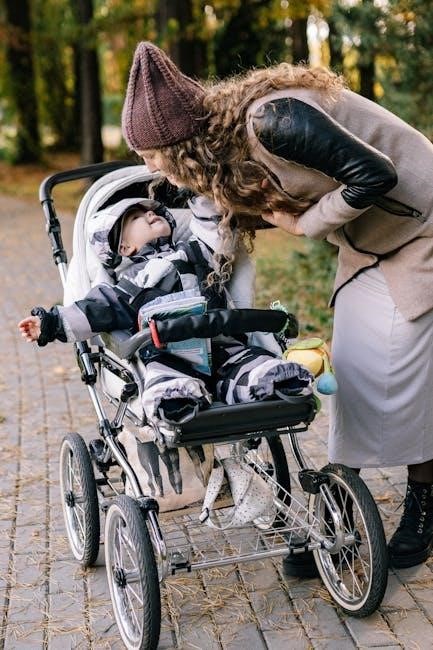
For a stiff handle, apply a silicone-based lubricant to the rotating joints. Avoid oil-based lubricants, as they can attract dirt. If the handle feels loose or wobbly, inspect the locking mechanism for damage and tighten any associated screws. A clicking sound during rotation might indicate a minor misalignment – try gently adjusting the handle’s position.
If the handle remains problematic, consult the Doona app or SimpleParenting’s support resources for detailed troubleshooting videos and FAQs. Do not attempt to disassemble the handle mechanism yourself, as this could void the warranty and potentially compromise safety. Contact customer support for assistance with more complex issues.
Troubleshooting Common Issues: Wheel Problems
Wheel functionality is crucial for a smooth Doona experience. If a wheel isn’t rotating freely, first check for obstructions like fabric, hair, or debris tangled in the axle. Carefully remove any obstructions, ensuring the wheel can move without resistance. A squeaking sound often indicates a need for lubrication.

Apply a silicone-based lubricant to the wheel axles, avoiding oil-based products. Inspect the wheels for any visible damage, such as cracks or flat spots. If a wheel feels wobbly, tighten the axle nut, but avoid over-tightening, which can restrict movement. Ensure the brakes are fully disengaged, as they can sometimes create the illusion of wheel resistance.
For persistent wheel issues, consult the Doona app or SimpleParenting’s website for detailed troubleshooting guides. If a wheel is significantly damaged, contact customer support for replacement options. Never attempt to repair damaged wheels yourself, as this could compromise the stroller’s stability and safety.
Understanding the Doona App and Additional Resources
The Doona app is a valuable companion, offering a wealth of information and support directly to your smartphone. Within the app, you’ll find detailed video tutorials demonstrating every aspect of Doona operation, from car seat installation to stroller mode transitions. It also provides quick access to the digital user manual, eliminating the need to search for a physical copy.
Beyond the app, SimpleParenting’s website serves as a comprehensive resource hub; Here, you can download the latest user manuals, view frequently asked questions, and access detailed specifications for your Doona model. The website’s help center offers troubleshooting guides for common issues, and a direct contact form allows you to reach customer support for personalized assistance.
Stay informed about safety recalls and important updates by registering your Doona on the SimpleParenting website. This ensures you receive timely notifications regarding any potential safety concerns or product improvements. Utilize these resources to maximize your Doona experience and ensure your child’s safety.
Doona Accessories and Compatibility
Enhance your Doona’s functionality with a range of compatible accessories designed for convenience and comfort. The Doona All Day Bag provides ample storage for baby essentials, easily attaching to the stroller handle. A variety of infant car seat covers are available, offering weather protection and added coziness for your little one.
For increased versatility, consider the Doona Rain Cover, shielding your baby from the elements during inclement weather. The Doona Winter Footmuff provides warmth and protection during colder months, ensuring a comfortable ride. Adapters are available to connect the Doona to certain infant car seat brands, expanding its compatibility.
Always verify accessory compatibility with your specific Doona model before purchasing. SimpleParenting’s website provides a comprehensive list of compatible accessories and detailed information on their usage. Using only approved accessories ensures the safety and proper functioning of your Doona stroller system, maintaining its integrity and performance.
Safety Recalls and Important Updates
Your child’s safety is paramount. Regularly check for safety recalls and important updates related to your Doona stroller. SimpleParenting proactively addresses any potential safety concerns and issues timely notifications to customers.
Stay informed by registering your Doona on the official SimpleParenting website. This allows you to receive direct updates regarding recalls, safety alerts, and product improvements. You can also find recall information on the manufacturer’s website and through relevant consumer safety organizations.
It’s crucial to immediately implement any recommended corrective actions following a recall notice. These actions may include inspecting specific components, replacing parts, or adjusting usage procedures. Ignoring a recall could compromise your child’s safety. Regularly visit the SimpleParenting help center for the latest information and guidance, ensuring your Doona remains a safe and reliable travel companion.